



Quick Answer: The core difference between the DNT TNC4K219R and the ZULUS 4K is thermal. The TNC4K219R is a multispectral hunting scope that combines a 256×192 thermal channel, 4K digital day/night imaging, a 2100-yard laser rangefinder, and built-in IR in one body — built for hunters who need to find game in complete darkness. The ZULUS 4K is a pure 4K digital day/night riflescope with a Sony STARVIS 2 sensor and a 50 mm f/1.8 lens, built for hunters who want a digital night vision scope that performs in low light without IR, and can add external IR when conditions go fully dark.
DNT's 4K lineup comes down to two scopes and one question: thermal and digital night vision, or digital only? The TNC4K219R pairs a 256×192 thermal channel with 4K digital imaging, a 2100-yard LRF, and built-in IR. The ZULUS 4K drops the thermal channel and leans on a Sony STARVIS 2 sensor inside a traditional 30 mm tube.
Both are 4K. Both run the DNT Ballistic Engine. The difference shows up when the light disappears. Here's what each scope is, where they diverge, and how to choose.

Side-by-side view of the DNT TNC4K219R and ZULUS 4K 4K scopes.
DNT TNC4K219R: Multi-Spectral Detection in One Body
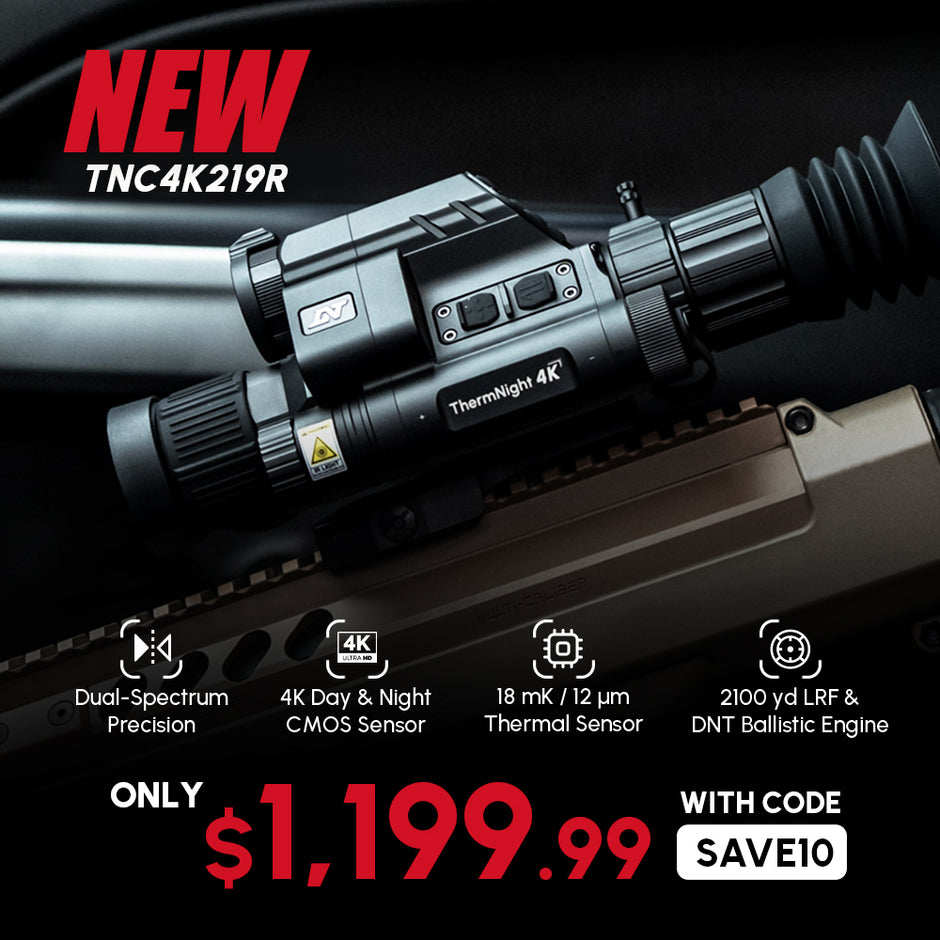
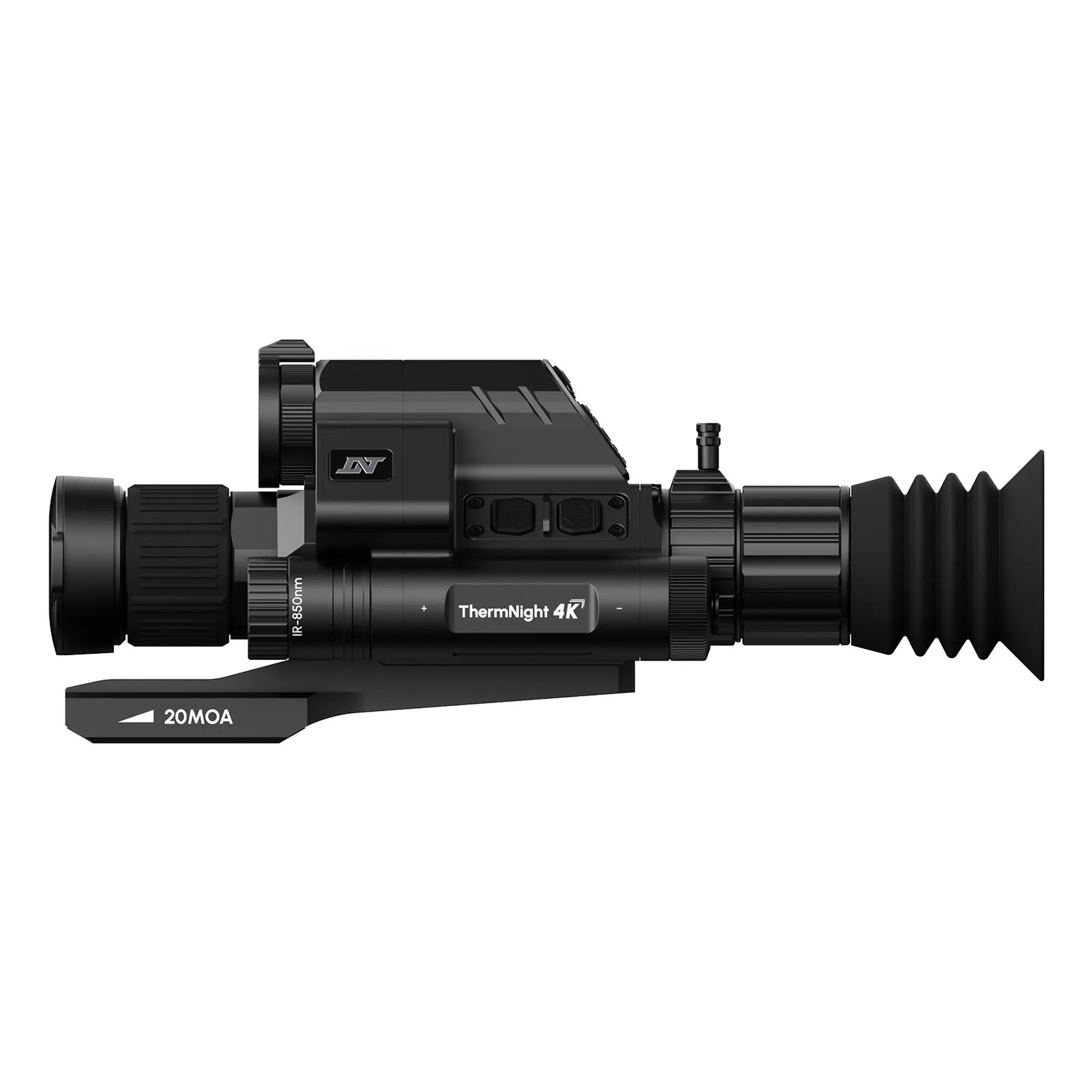
The TNC4K219R is DNT's multispectral hunting scope — a thermal channel, a 4K digital day/night channel, a laser rangefinder, and a ballistic calculator in one body.
The thermal channel does the detecting. A 256×192 sensor picks up heat signatures in total darkness, letting you scan without revealing your position. That's the core advantage of a thermal scope with 4K digital night vision.
Identification is where the 4K channel takes over. Once thermal finds a heat signature, you switch to 4K to confirm what it is. Both channels can run in PiP mode, so detection and identification happen in one view — a workflow of thermal detection followed by digital identification, which sets a multispectral scope apart from a digital-only optic.
Ranging, ballistics, and night illumination are built in: a 5–2100 yard LRF feeding the DNT Ballistic Engine, a 450-yard IR illuminator, plus Thermal Auto Zeroing and Thermal Zoom Lock.
Who it's for: hunters who make night hunting their primary scenario and want thermal, 4K, and IR in one body.

TNC4K219R thermal detection in complete darkness, with the 4K digital channel confirming the target.
DNT ZULUS 4K: Pure 4K Digital, Classic Feel
The ZULUS 4K takes the opposite approach. Where the TNC4K219R adds thermal, the ZULUS 4K keeps it pure digital — a 4K digital day/night riflescope built around a Sony STARVIS 2 sensor and a fast 50mm f/1.8 lens with ED glass.
The optical foundation is where it shines. The STARVIS 2 sensor holds color detail in low light — moonlight, starlight, dusk — without any IR. That makes it a strong fit for low light hunting, where a thermal image would show heat but not detail. When conditions go fully dark, add an external illuminator and the 4K sensor does the rest.
A 5–1300 yard LRF feeds the DNT Ballistic Engine, with 4K-30FPS and 1080P-60FPS recording. And it does all of this in a 30mm tube that feels like a classic riflescope.
Who it's for: Hunters who want a digital night vision scope that works in low light without IR, prefer a familiar scope profile, and can add an illuminator when conditions go fully dark.

ZULUS 4K STARVIS 2 sensor holding color detail in low light.
The Core Difference: TNC4K219R VS. ZULUS4K
The two scopes share a 4K digital channel, a laser rangefinder, and the DNT Ballistic Engine. Where they differ is in detection, identification, and what happens when the light disappears.

TNC4K219R at $1199.99 and ZULUS 4K at $849.99, both with code SAVE10.
How to Match Scope to Hunt?
How you hunt decides which scope you need — and the deciding factor is light.
If you hunt in total darkness
The TNC4K219R is the answer. Its thermal channel finds game with no light at all, and the built-in 450-yard IR backs it up when you need a digital view. For hog and predator hunting at night, that's the difference between scanning a field and scanning it blind.
If you mostly hunt in low light
The ZULUS 4K is built for this. Its STARVIS 2 sensor holds color detail in low light — moonlight, starlight, dusk — even without IR illumination. When conditions go fully dark, an external IR illuminator further extends its reach.
If you want everything built into one scope
If you'd rather not mount an external IR or carry extra gear, the TNC4K219R is the all-in-one option. If you don't mind adding an illuminator for the occasional night hunt, the ZULUS 4K keeps the setup lighter and simpler.

DNT TNC4K219R held in the field, thermal channel active for detection.
Conclusion
The TNC4K219R and the ZULUS 4K are both 4K scopes — the difference is what each one is built to do when the light disappears. If your hunting happens in total darkness and you want a thermal scope with 4K digital night vision, a 2100-yard LRF, and built-in IR in one body, the TNC4K219R is the answer. If you want a digital night vision scope that works in low light without IR, prefer a familiar 30mm tube, and can add an illuminator when conditions go fully dark, the ZULUS 4K is the better fit.
Both are built to the same standard. Pick the one that matches how you hunt — and get it on the rifle.
[Explore the TNC4K219R] [Explore the ZULUS 4K]
FAQs
Do I need thermal, or is 4K digital enough?
It depends on when you hunt. If most of your hunting happens in complete darkness, thermal detection is the difference between finding game and not. If you hunt mostly in daylight, twilight, or with an IR illuminator, 4K digital covers it.
Does the ZULUS 4K work without IR at night?
In low light, yes. Under moonlight, the STARVIS 2 sensor holds color detail without any illumination. In complete darkness, it needs an external IR illuminator.
Is 256×192 thermal resolution enough?
For detection, yes. The thermal channel is built to find heat signatures, not to identify them in fine detail. Once a target is detected, you switch to the 4K digital channel to confirm.
Which one is better for hog and predator hunting?
Hogs and predators are most active at night. If that's when you hunt, the TNC4K219R's thermal channel gives you detection with no light source. If your hog and predator hunting happens mostly at dawn or dusk, the ZULUS 4K's low-light performance covers it.
Do both scopes record video?
Yes. The TNC4K219R and the ZULUS 4K both support 4K-30FPS and 1080P-60FPS recording.