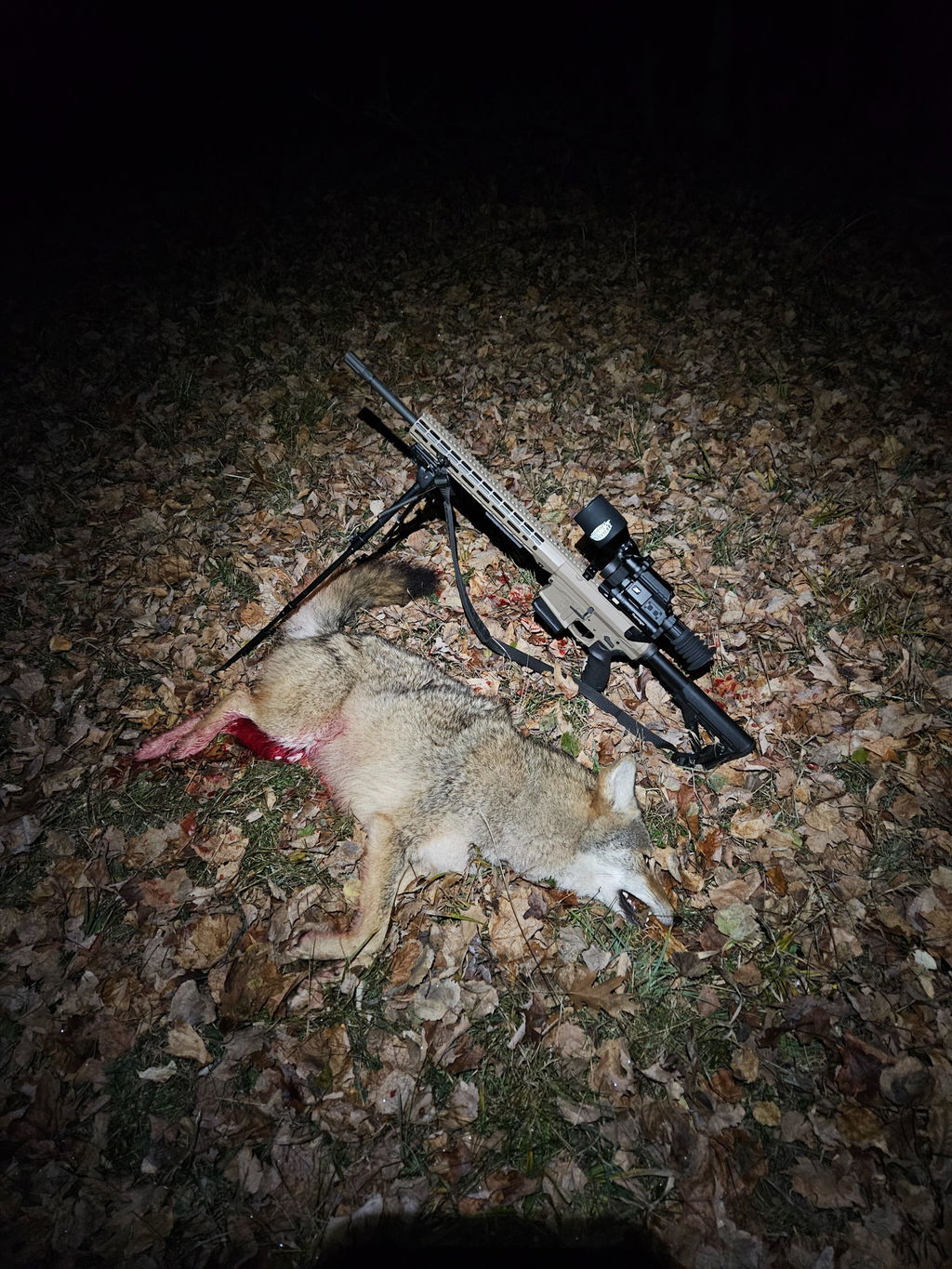
Between predator hunting and nuisance animal removal, I have used a variety of different night hunting tools - but this one is my favorite.
Those who have been hunting with thermal a while know that there is a substantial learning curve associated with identifying foxes vs. coyotes, and those who are new to thermal are absolutely going to make mistakes. Those mistakes are not a problem if fox and coyote season completely overlap, but in my state there is not a complete overlap between fox and coyote season (fox season starts about a month later and ends a month earlier than coyote). When our crew was running only thermal, we missed numerous shot opportunities trying to decide if the canid we were looking at was a fox or a coyote. I started running IR night-vision to take out the "guess work," but then I was missing shot opportunities because I was switching between a handheld thermal for detection and my NV scope for shooting, and I would have a hard time finding the critter in my scope, especially if it was not looking directly at us.
The TNC635R solved all of those problems, and last year I took more coyotes than any of the prior seasons! I set up the main screen of the optic for thermal, and the PiP for IR NV, and now I have the best of both worlds. The high quality thermal provides excellent detection capacity, while the IR NV optic provides image quality that allows me to positively ID coyotes, foxes, and other critters at distances of 300+ yards with an upgraded IR illuminator.
The only "dings" I would give this optic are:
1) The menu system is a bit complicated to navigate, so set it up at home or at the range exactly how you want it set up, so the only thing you need to do in the field is turn the unit on and off, turn the range finder on and off, and maybe turn the video feature on and off.
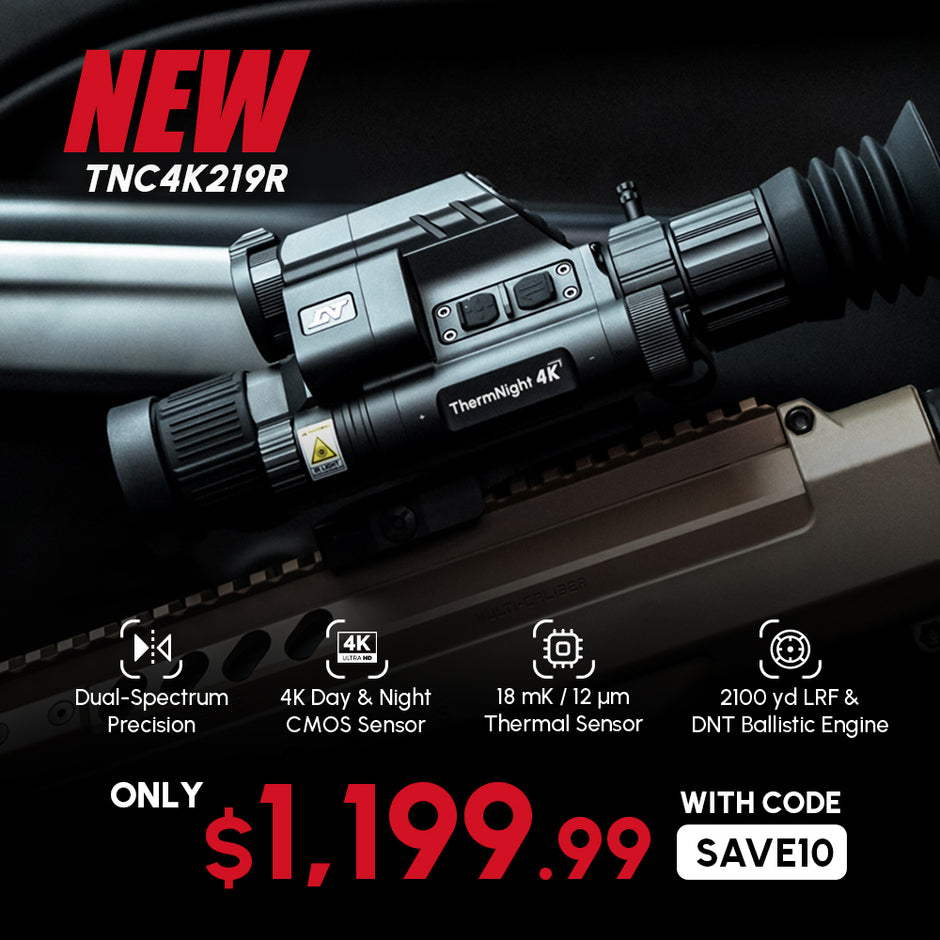
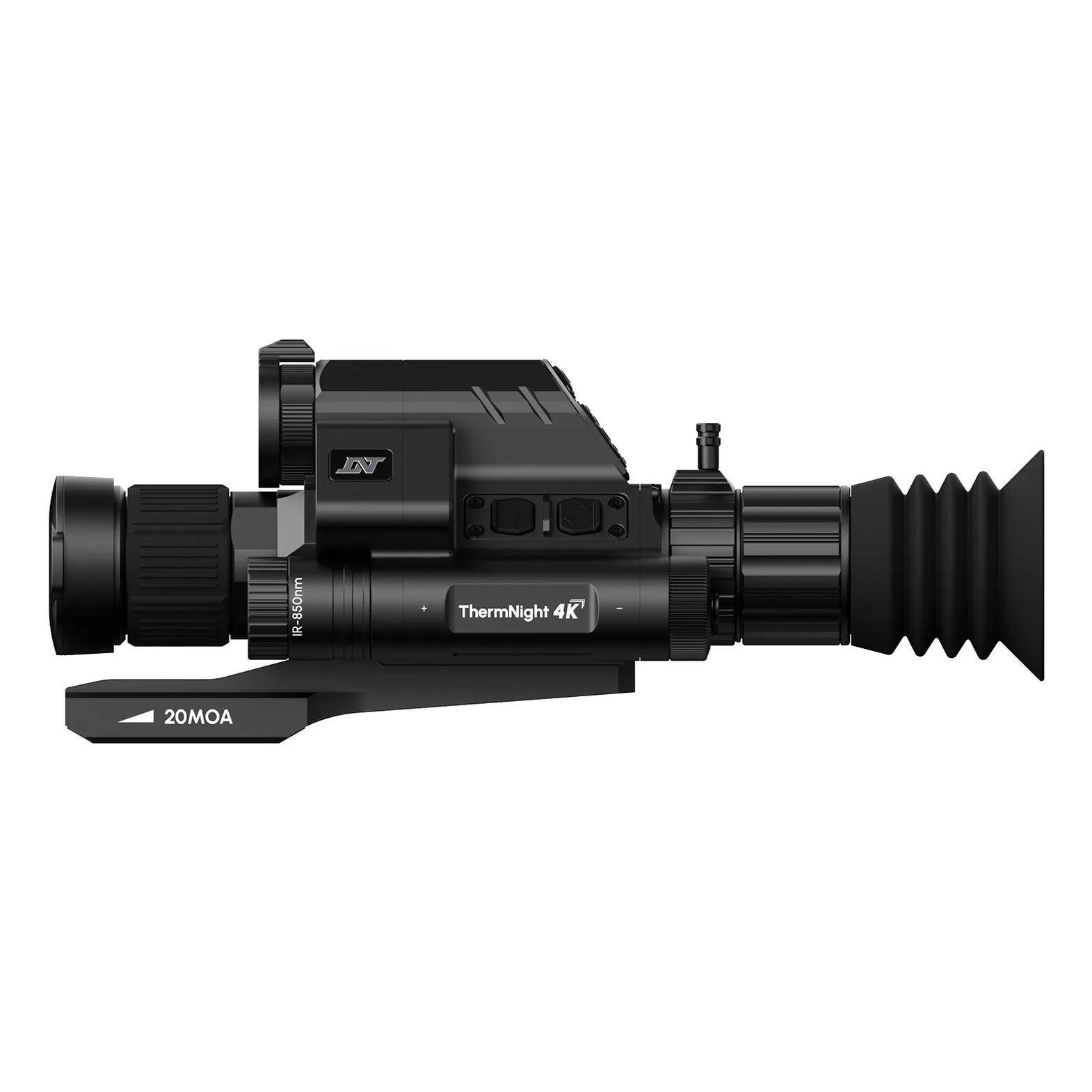
2) The IR NV is decent quality, but I think some thermal image quality can be sacrificed, and the IR NV enhanced to 4K (it looks like that is exactly what DNT did with the new TNC4K219R - so I just ordered one of those to put on my back-up gun).
3) The IR illuminator that is integrated into the optic is OK for short to moderate distance (100-150 yards), but lacks the light output and focus capacity for long range (200+ yards). That's fine, because most shots are going to happen at <200 yards, but having the capacity to positively ID critters at 300+ yards is helpful. Integrating the small picatinny rail mount onto the optic was a perfect idea for anyone who wants to upgrade their optic, so kudos to you DNT for adding that small, but important, feature.
Overall, I think thermal/IR NV combo optics are the future of night hunting and nuisance wildlife control, and I'm pleased with my TNC635R. Keep up the good work DNT!