



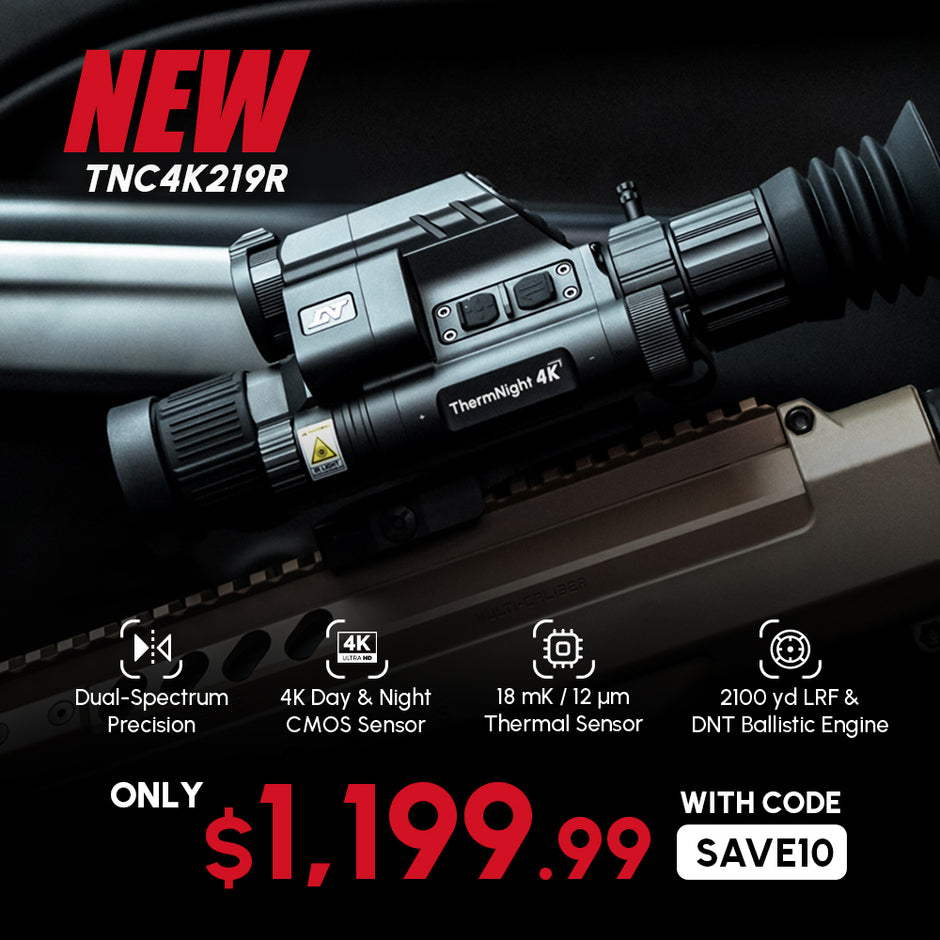
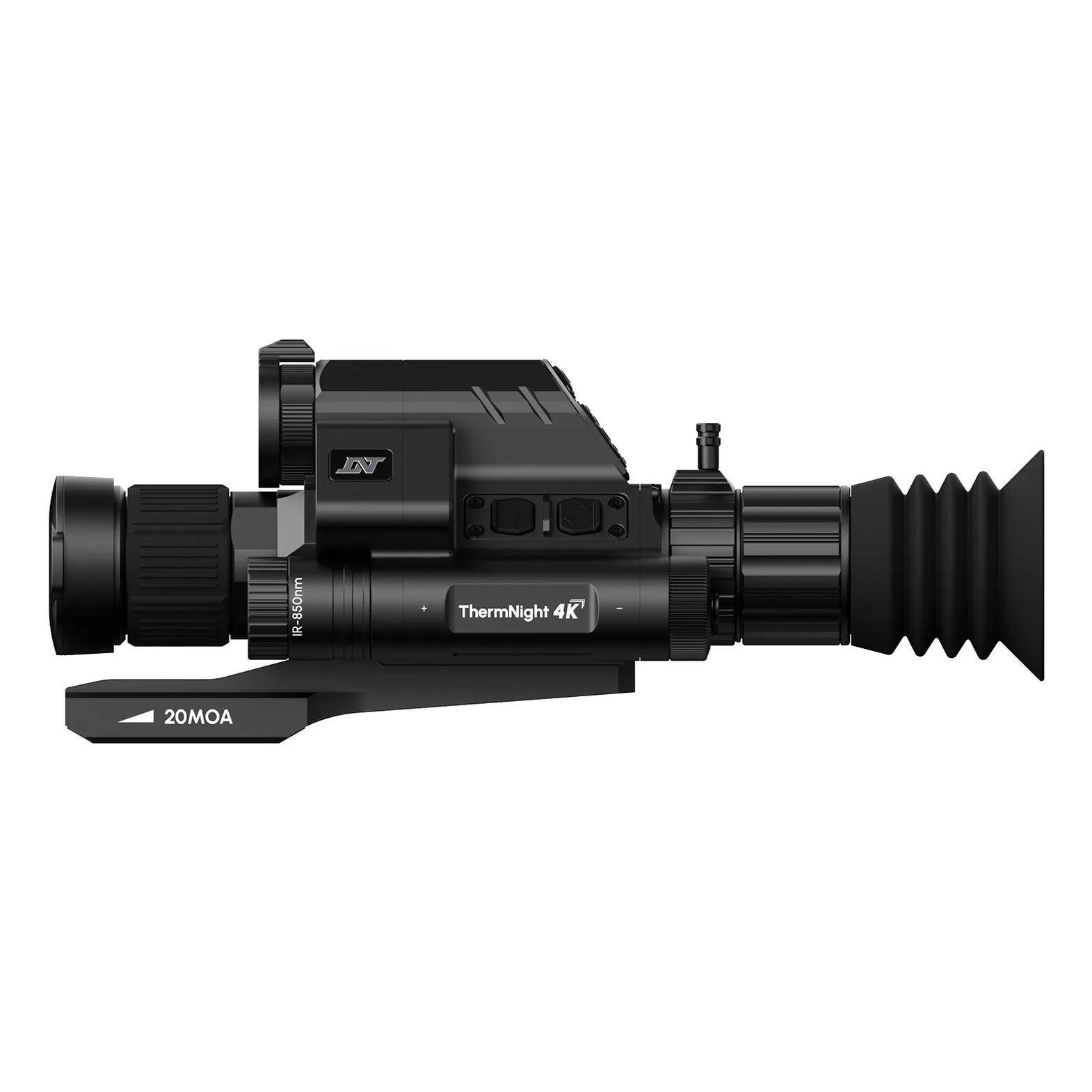


DNT ThermNight TNC335R: 384×288 Thermal + Digital Night Vision in One Scope
This review examines Josh’s hands-on testing of the DNT ThermNight TNC335R on the Pursuit of Accuracy channel. He tested the scope during daytime and nighttime sessions using a suppressed CZ457 in a practical field setting. We appreciate his field testing and insights.
The DNT ThermNight TNC335R is a multispectral thermal scope that combines thermal imaging with digital day and night vision in one optic. Its thermal channel helps users quickly detect heat sources in the dark, while the digital channel provides additional visual detail to help assess what they are looking at. With an integrated laser rangefinder and ballistic calculator, it brings key tools for observation and shot preparation into a single setup.
How do these features work together in practical use? This review draws on Josh’s testing to explain the TNC335R’s dual-channel imaging, zeroing process, rangefinding and ballistic functions, nighttime viewing, and key usability considerations.
DNT TNC335R Specifications at a Glance
For the complete specification list, including display, digital-channel, and physical details, visit the DNT TNC335R product page.
TNC335R Thermal Imaging and Digital Night Vision: Detect First, Identify Clearly
Thermal imaging and digital night vision serve different but complementary purposes. The TNC335R combines both to help users locate heat sources and gather additional visual detail in one optic.
Thermal imaging detects heat differences rather than relying on visible light or reflected IR illumination. This makes it useful for locating heat signatures in darkness and against visually cluttered backgrounds, where branches and vegetation can interfere with reflected IR light. It does not see through obstructions, but it can help reveal heat sources that are difficult to spot through digital night vision alone.
Digital night vision uses a low-light CMOS sensor to provide a more recognizable image of the surroundings. The built-in IR illuminator improves visibility in near-total darkness, adding visual context that can help users assess objects first located through thermal imaging.
Josh's nighttime testing demonstrated the difference between the two channels. With the IR illuminator off, the digital image was hard to discern. Activating it improved visibility, while thermal remained useful for locating heat signatures against background clutter.
The TNC335R offers three ways to use these channels:
-
Thermal scanning: Locate heat signatures using the thermal view.
-
Digital confirmation: Switch to digital night vision for additional visual detail.
-
Picture-in-Picture (PIP): Keep thermal as the main view while displaying digital night vision in an inset.
Users can switch between channels with the side-mounted button or activate Picture-in-Picture (PiP) to view both simultaneously, moving from heat detection to visual confirmation without changing optics.
Daytime Setup: Zeroing, Rangefinding, and Ballistic Calculation
The DNT TNC335R combines one-shot zeroing, an integrated laser rangefinder, and a ballistic calculator to simplify sight-in and shot preparation.
The one-shot zeroing process begins with the digital channel. After firing, users freeze the image and move the reticle to the observed point of impact. The thermal channel can then be aligned to the same point of aim using a reference visible in both views. A recent bullet impact may also appear as a warm mark in the thermal image, providing another reference.
Josh demonstrated this approach by aligning the two channels to a shared reference point on his CZ457.
The integrated laser rangefinder measures distances from 5–1,100 m (5–1,200 yd). The ballistic calculator uses the selected ballistic profile and range data to display a ballistic hold correction.
In Josh’s review, the scope ranged a target at 138 m and displayed a ballistic correction of 4.1. This shows how the built-in ballistic calculator uses range data and the selected ballistic profile to provide an aiming reference. For the most accurate results, users can customize the profile to match their ammunition and shooting setup.
Practical Nighttime Viewing and Identification Distance
Practical viewing and identification distance depends on target size, background, environmental conditions, and the level of detail needed for identification.
Small-Pest Control: Around 100–150 Yards
For small-pest control at night, the DNT TNC335R helps users detect small heat signatures that may be difficult to spot through vegetation and other visual obstructions with digital night vision alone. Once a heat source is located, the digital night-vision channel provides additional visual detail to help identify what they are looking at. Picture-in-Picture (PiP) combines both views, allowing users to scan with thermal while keeping digital night vision in view for confirmation.
In Josh’s nighttime field test, he described approximately 100–150 yards as a practical working range for small-pest control, with thermal imaging providing clear target detection at 150 yards.
Larger Targets: Extended Identification Distance
Larger animals generally produce stronger thermal signatures than small pests, making them easier to detect at greater distances. In a separate DNT demonstration, the TNC335R successfully identified a deer at 283 yards, further demonstrating its long-range identification capability.
For users who prioritize greater thermal image detail at longer distances, the 640 × 512 TNC635R is another option to consider.
Need More Thermal Detail at Longer Distances? Consider the TNC635R
The TNC335R offers a practical multispectral solution for nighttime observation, but users who need more thermal image detail for viewing targets at greater distances may want to consider the DNT ThermNight TNC635R. Equipped with a 640 × 512 thermal sensor, the TNC635R delivers higher thermal resolution and a wider field of view.

DNT ThermNight TNC635R multispectral scope used for long-range hunting at night.
If your primary use is small-pest control at typical working distances, the TNC335R may be a suitable choice. If you need greater thermal detail for observing larger targets at extended distances, the TNC635R is worth considering.
Final Verdict
The DNT TNC335R combines thermal imaging and digital night vision to help users locate heat sources and gather additional visual context in one optic. With an integrated laser rangefinder, ballistic calculator, and PIP, it brings multiple observation and shot-preparation tools into a single setup.
Its feature-rich controls may take some time to learn, and practical viewing distance depends on target size and field conditions. For users who want dual-channel imaging in one optic, the TNC335R offers a versatile setup.
FAQs on DNT Thermnight TNC335R
Can I use the TNC335R in rain or dust?
Yes. The TNC335R is rated IP67 for dust and water protection. Its specified operating temperature range is -20°C to 50°C.
Is the DNT TNC335R suitable for hog hunting and pest control?
The TNC335R can be used for different nighttime observation applications, but practical identification distance depends on target size, conditions, and the detail needed. In his review, Josh discussed roughly 100–150 yards as a practical range for small-pest use. His video did not include a specific long-range hog identification test.
What is the difference between a 384 × 288 and a 640 × 512 thermal scope?
A 640 × 512 thermal sensor provides more image detail than a 384 × 288 sensor. The TNC335R uses 384 × 288 resolution, while the TNC635R uses 640 × 512, making the TNC635R the option to consider when greater thermal detail is a priority.