



It's September 1st, you are sitting in your living room at 8 p.m., and your phone dings. You look over at it and it's your deer trail camera. You click on the icon and open up the app just to find 15 hogs tearing up your brand-new deer feeder. In that instant, a 300-dollar deer feeder looks like an old t-shirt and is just torn to shreds.
The next day you travel out to pick up the carnage and your entire hunting area, which you planted and spent a ton of money on, looks like the neighbor just came over with his disc and plowed everything under. At that moment, something clicked: we have a problem.

How I Got Started Night Hog Hunting
Perhaps your story is identical to mine or different, but for me, this is how it all started. My name is Nick Jones and I have hunted every legal species in SW Louisiana for the last 35 years. Growing up primarily duck and deer hunting, I never really had any exposure to wild hogs until about 2012. And this scenario is exactly what got me into wanting to hunt hogs.
I had just gotten on a new deer lease and spent hundreds of dollars and countless days bush hogging, clearing trees, building stands, setting feeders, and planting food plots. All for it to be destroyed in a matter of hours. I hunted hogs, all in the daytime, for several years at the deer lease.
Now, fast forward about 10 years, and a good friend of mine offered me an opportunity to try hog hunting at night. He told me he had everything I needed and to just bring myself and rubber boots. Some friend he is — I am now addicted to this sport and have a lot of my life invested in this, with my wife and daughter hunting with me.

The Real Cost of Wild Hog Damage
I still recall that feeling the first night in the truck. I was nervous, anxious, excited, but most of all, I was TIRED. We probably went about 150 miles that night covering different fields and we ultimately struck out. The next day my phone rang…. “You want to go back out tonight?” And despite being exhausted, I couldn’t wait to get off of work and go.
We finally got on some hogs and I quickly learned I thought I was a good shot until they started moving. Once the gun smoke settled and we began picking up the hogs for a photo, I saw firsthand just how much damage these animals were doing to this one particular rice field. I asked my friend if this was unusual and he replied, “Not at all.” It was in that moment that I realized just how devastating these animals were and how much damage they could do in one night.
Once I caught up on some sleep, I began researching wild hog damage reports and talking to local farmers. One farmer said he estimated his damages to be in the tens of thousands of dollars from wild hogs in one season. At that moment, I realized just how important this sport and hobby of mine was, and I haven’t slacked up since.

From Static Ranges to Running Hogs
Starting out with my friend, I probably hunted 1 to 2 nights a month with him and began learning the way he did things. I was green to the entire night hunting thing and was absorbing everything I could. I began drinking energy drinks and eating gas station junk food at 2 a.m. to fuel me for the next field.
I learned that even though I spent 2 hours daily at my local gym, I was not in nearly enough shape to make several-mile hikes chasing hogs between pastures. I also learned that no matter how many times I go to a static range and fire a rifle, it still doesn’t help me when the pigs are running for their lives. I also learned it's okay to not be good at this starting out, as there is a learning curve. But when you make that stalk and get within 100 yards of them and can hear them rooting around, the gunfire erupts, and pigs start falling, it is all worth every last second.

Building a Budget Hog Hunting Rifle Setup
After about a dozen or so times, I decided I was really enjoying this and I wanted to start building my own setup. Starting out, money was tight as my wife had just quit her job to be a stay-at-home mom of our then 9-year-old daughter. I picked up a few shifts from work and built myself a cheap 5.56 rifle. I saved a little more money and bought a cheap suppressor. Fortunately, my friend had an old tripod I could use, as well as an old thermal optic he loaned me and a thermal monocular.
This setup worked and got me in the game, but it wasn’t perfect by any means. He was running a 7.62x39 rifle, and I would watch his hogs crunch and fold while mine took several rounds from my 5.56 before they slowed down. Looking back now, I wish I would have saved some more money and bought good, high-quality stuff from the start. Being as I went the cheap route, I ended up having weapon issues, which ultimately cost me more money, all for me to ultimately just purchase a good rifle.

Choosing the Right Caliber, Suppressor, and Tripod
I am now running a 7.62x39 AR made by Bilson Arms. I personally like this round as the ammo is relatively easy to obtain, is still somewhat reasonably priced, has very manageable recoil for follow-up shots, and I can reach out to 200 yards with no problem. There are plenty of other great calibers out there, and my advice would be: get a round you can afford and are ok with shooting upwards of 100 rounds a hunt, has minimum recoil, and is heavy enough to penetrate a hog's super-thick hide.
I personally do not shoot anything unsuppressed anymore and would highly encourage you to purchase a suppressor also. But if you are not sure if you are going to like this type of hunting, that is one item you could potentially skip in the beginning.
If you do any type of spot-and-stalk, you will need a tripod. This is another one of those areas where you can save a little money by buying a cheaper tripod. I started out with a BOG off Facebook Marketplace for 60 bucks, which my wife is still using to this day. Currently, I am running a Two Vets Inverted with a ball head mount. This tripod is half the weight of my BOG and I have more maneuverability when out hunting. Be mindful if you are spot-stalking: you are going to be walking, and an 8 lb tripod doesn’t seem heavy until you’ve walked 3 miles one way and have to go back to the truck.

Thermal vs. Night Vision: Which Is Better for Spot-and-Stalk Hunting?
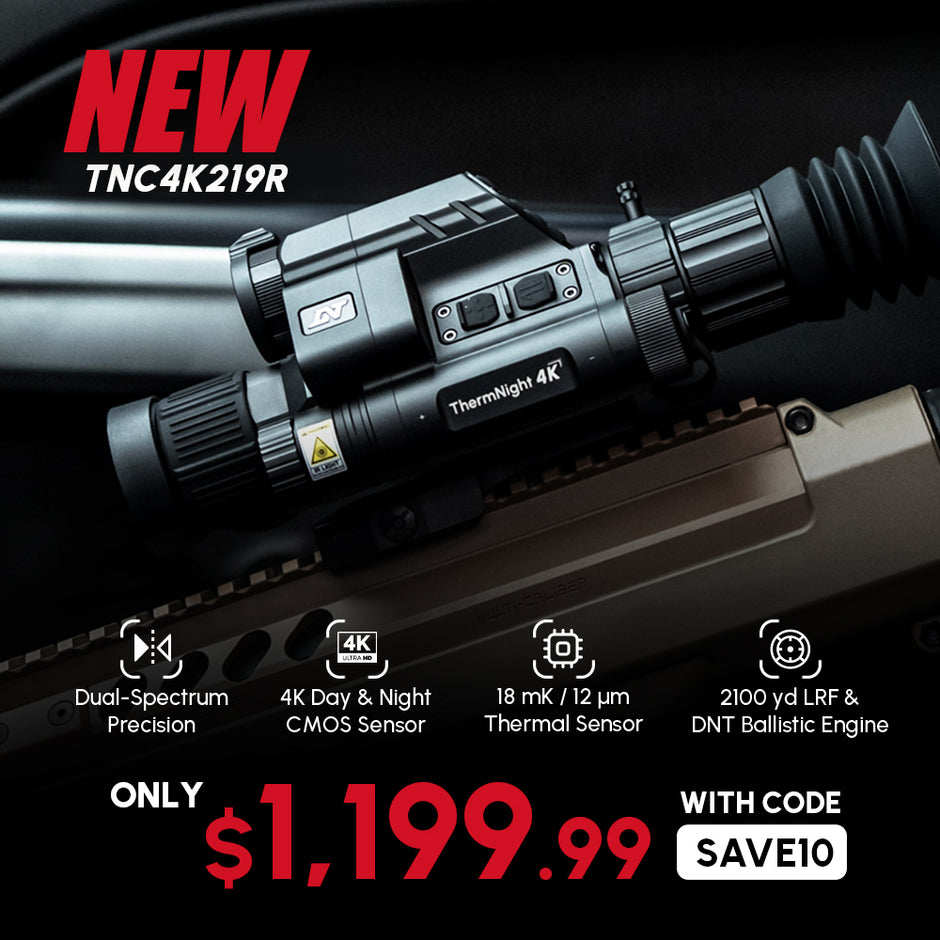
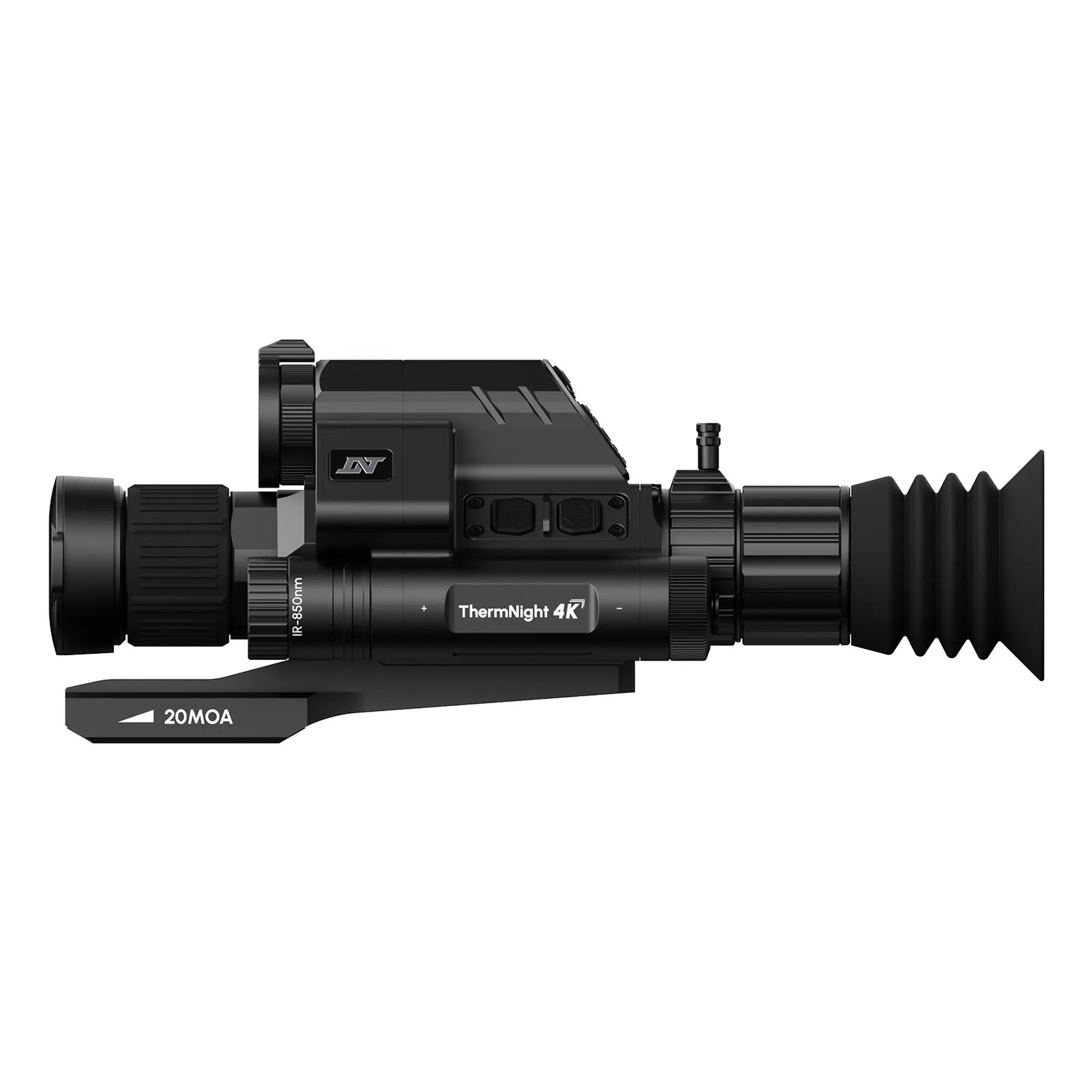
The one thing out of all my gear I will not cheap out on is going to be my optics, either my scanner or scope. Before DNT released the HOUND monocular, I was using my HYDRA as my scanner and then I had the ThermNight on my rifle. I personally enjoy running thermal; however, with the ThermNight, I have the ability to run Picture-in-Picture (PIP) and can use both thermal and day/night vision with one scope.
I would highly recommend getting a thermal scanner to scan with, and if you needed to save some money, then go with a night vision scope for your weapon. Hogs typically are in grass, the other side of rice field levees, or behind some brush, and when you're scanning in just night vision, it can be hard to locate them. I find when I pick up my HOUND, a quick scan to see if anything white pops up (I like the White Hot color palette) helps me process the field faster and allows me to decide if I need to stay or go.
The negative to shooting night vision only is the muzzle flash. I find when I have a solo hog, night vision works excellently, but if there is more than one, or I have to have a follow-up shot, I find my muzzle flash washes out my night vision image for a split second, making those follow-up shots harder.

Hunting Hogs with Family: Baiting and Calling Tips
As previously mentioned, I typically do a spot-and-stalk for most of my hog hunting, but anytime I am taking my wife or daughter out, I try and hunt over bait. Neither of the ladies can keep up walking for miles on end, and in order to keep them motivated and wanting to go, I choose to hunt over corn feeders at my deer lease.
Sometimes we will go get in the stand 30 minutes or so before dark, and other times we ride the lease either in the truck or side-by-side, park about 200 yards away from the stand, and just slowly stalk in and see what’s eating. Generally speaking, I do not try and call hogs, as I have only ever found success doing this when it is a female hog (sow) with piglets. But if you know you have several sows and piglets in the area, calling is a pretty good option to try and get them to show face.

How to Earn Hunting Permission from Landowners
After now becoming fully invested and addicted to this sport, I decided to start trying to obtain my own hunting land. I still hunt with that same friend, just now it's 1 to 2 nights a week, but I am slowly trying to build farmland permissions for us to share and for me to be able to access whenever he cannot go.
A lot of times while driving in the daytime, you can see signs of hogs where they have torn up land. A quick detour and pulling into their driveway to ask for permission is sometimes all it takes. Other times, current farmers will spread the word that I treat them well, am respectful and trustworthy, and that has landed a few fields. I will say, being respectful to any landowners, even if they deny you the hunting privilege, goes a very long way.
I have had landowners in the past start off by saying no, and then call me back days later and say yes. They usually all have the same story: "I don’t want my cows getting shot," "I have farm equipment," "What if you get injured?", etc. I always reassure them I am using high-quality optics and can tell the difference between a cow versus a hog, I will not shoot anywhere even close to farm equipment as the hog is not worth a stray bullet, and I also tell them I am fully insured. By being respectful, answering any questions they have, and not being pushy, they usually start thinking how much of a benefit I actually could be for them. That is when they normally start making phone calls, figure out I am honest, and most of the time, they will call and allow me permission to hunt.
Shoot, the other day my wife even picked up a piece of property for me just by being at church and talking to a lady who saw her shooting a hog on Facebook!
One more piece of advice when hunting a new piece of property: always leave everything exactly the way you found it. If you see something out of place or something doesn’t seem right, call that landowner and report it to him. I promise you they will not be mad with you calling them at 2 am. In fact, I can almost guarantee they will be excited to know they have a free patrol on their property.

Tips for First-Time Night Hog Hunters
In concluding, the best advice I could give a new hunter when starting out would be: don’t get frustrated with yourself and give yourself some leeway. You are going to make mistakes, like slamming the truck door, or positioning yourself downwind of the hogs, or saying, "I think I can get 20 yards closer," and then they disappear. Mistakes happen; you just have to learn and adapt on the move.
Always check the wind with some type of windicator, try and position yourself to have the wind in your face, take your time, and be quiet. On your first spot-and-stalk, you might get to 150 yards and think, this is as close as I can get. If you are confident in your shooting abilities, take the shot. Next time you will think, I can get closer, and before long, you are 30 yards from the hogs and they have no idea you just slipped in like a ninja and are fixing to send them to bed without dessert.
Ready to build your own night hunting setup? Explore DNT's Thermal and Night Vision Optics to find the right solution for your next hunt.