



By Nick Jones with Outdoors with Nick and Penny
Q1: What’s the #1 rule every hog hunter needs to burn into their brain before heading out?
I would say safety is paramount. In any type of firearm sport, safe handling is critical. Now add darkness, uneven terrain, fence crossings, and hunting with a group, and safety has to be ingrained into your brain.
You have to be aware of where your muzzle is at all times. In low-light conditions where you cannot see clearly, you must keep your finger off the trigger and ensure you have a clear target—you have to make sure you are not shooting a farmer’s pet or sending a round toward a structure or farm equipment.
Whenever I am hunting, my hunting party conducts a safety brief, and we go over the four cardinal rules as well as a quick recap of proper safe handling.

Q2: What’s the best caliber or cartridge for taking down hogs cleanly and effectively?
Now here is a loaded question: the best caliber debate. There is no one true "do-it-all" round—each has a tradeoff, and you have to find what you are willing to settle for based on your particular hunting.
-
The 5.56 Rifle Option: Great round, plenty fast enough, very affordable, has knockdown power, is extremely accurate, and can push some reasonable distance. But a downside to this round as far as hogs go—due to their extremely thick hide and the “armor,” if you will, behind their shoulder—is on the run for follow-up shots, it takes several rounds to stop them. So the money you’re “saving” by shooting cheaper ammo is really not a savings because you’re now having to shoot the same hog 3 to 5 times to put him down on the move if you cannot manage a head shot.
-
The 6mm ARC Option: This is my daughter’s (Penelope) round. She uses it for everything from deer to coyotes, nutria, and hogs. It really is a do-it-all round in my opinion, but the negative to it is that it comes out to right at $1.80 a round for the 103 ELD-X. That starts to hurt the pocketbook after a long night of hunting.
-
Nick's Choice - 7.62x39: Statistically, this round is relatively cheap, easily found, has plenty of knockdown stopping power for on the run, can reach out to 200 yards with very little holdover, and it has manageable recoil for your follow-up shots. Also, when you find it on a good sale and can get it for 50 to 75 cents a round, it doesn’t hurt the pocketbook as bad when you mag dump on a sounder.
In my opinion, the best caliber for taking down hogs is one you can afford, can easily obtain, is heavy enough with enough energy to penetrate their thick hide, light enough to pack for a 3-mile hike through a hayfield, has good trajectory for your particular ranges, and has a very manageable recoil for those follow-up shots. There is nothing worse than shooting a .308, getting rocked back on your heels in the mud, and then trying to find your target again all while they are steadily running away.

Q3: Rifle, suppressor, or AR platform — what’s your preferred hog hunting setup and why?
An AR platform by Bilson Arms is my go-to rifle. As previously mentioned, I run the 7.62x39, and I run it in this particular platform. The Bilson rifle has a very unique, one-of-a-kind forward charging handle. This is way better than the traditional butterfly-type charging handle where you struggle to get your fingers under an optic to grab them—or if you happen to live in a cold climate (in SW LA I get about 3 cold days a year) and you wear gloves, it’s almost impossible to reach them. I love the forward charging system as I can easily work my rifle to fix any type of malfunction quickly and efficiently, and it all works while staying secured in my tripod.
In regards to a suppressor… YES. You are not allowed to hunt with me if you are not suppressed. What started out as one has slowly escalated to the point of wife questions, but now almost all of my rifles—and several pistols—have suppressors on them. I am currently running a Silent AF Vigilantis in .30 caliber. I thoroughly love my can with its unique design and custom color, and I would encourage anyone reading this to check them out. But if you are new to this thing, I would suggest finding a suppressor you can afford and getting ONE to start with. I would also recommend you get a .30 caliber suppressor so you can switch it between any guns you have.
And finally, you need a hunting tripod if you are going to be doing spot-and-stalks for hog hunting. There are numerous tripods out there, and you need to find one that is going to work for your height and that you can easily use in the darkness. I started off running a BOG with the Deathgrip head on it. It is an awesome tripod for the price, and I am still running two of them to this day; my daughter runs one and my wife runs one.
I recently had the opportunity to use an inverted-style tripod with a ball head, and I am liking it so far. I did notice the inverted style offers a little more height than the BOG (I am 5’10” for reference), it is considerably lighter, and I personally like the ball head as I can adjust all of my axes. In the end, make sure to get one you know you can carry on your shoulder plus the weight of your rifle, one that’s easy to deploy, and one that is rock-solid for when the shooting starts.

Q4: How important is thermal or night vision for hog hunting, and is it worth the investment for a newcomer?
Having high-quality optics, in my opinion, is where the rubber meets the road. If you spend $2,000 on a rifle, hundreds on ammo, and $1,000 on a tripod, and then try to pinch pennies on the thing that seals the deal, you are asking for trouble.
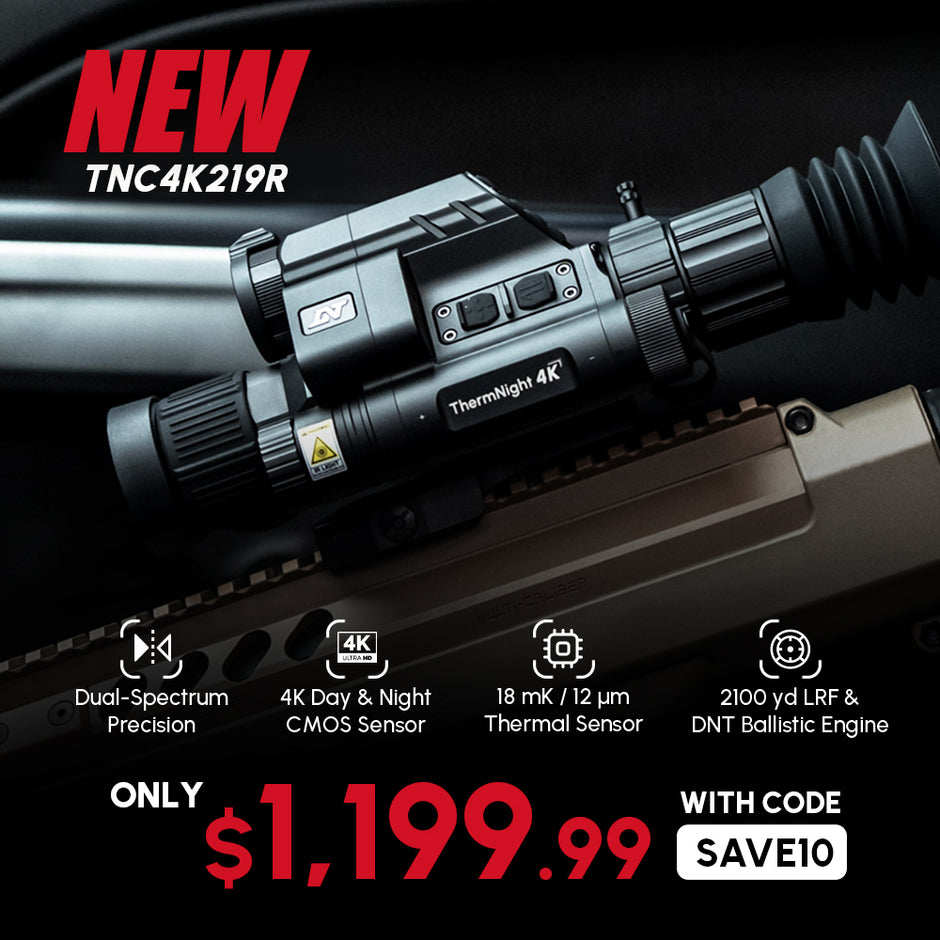
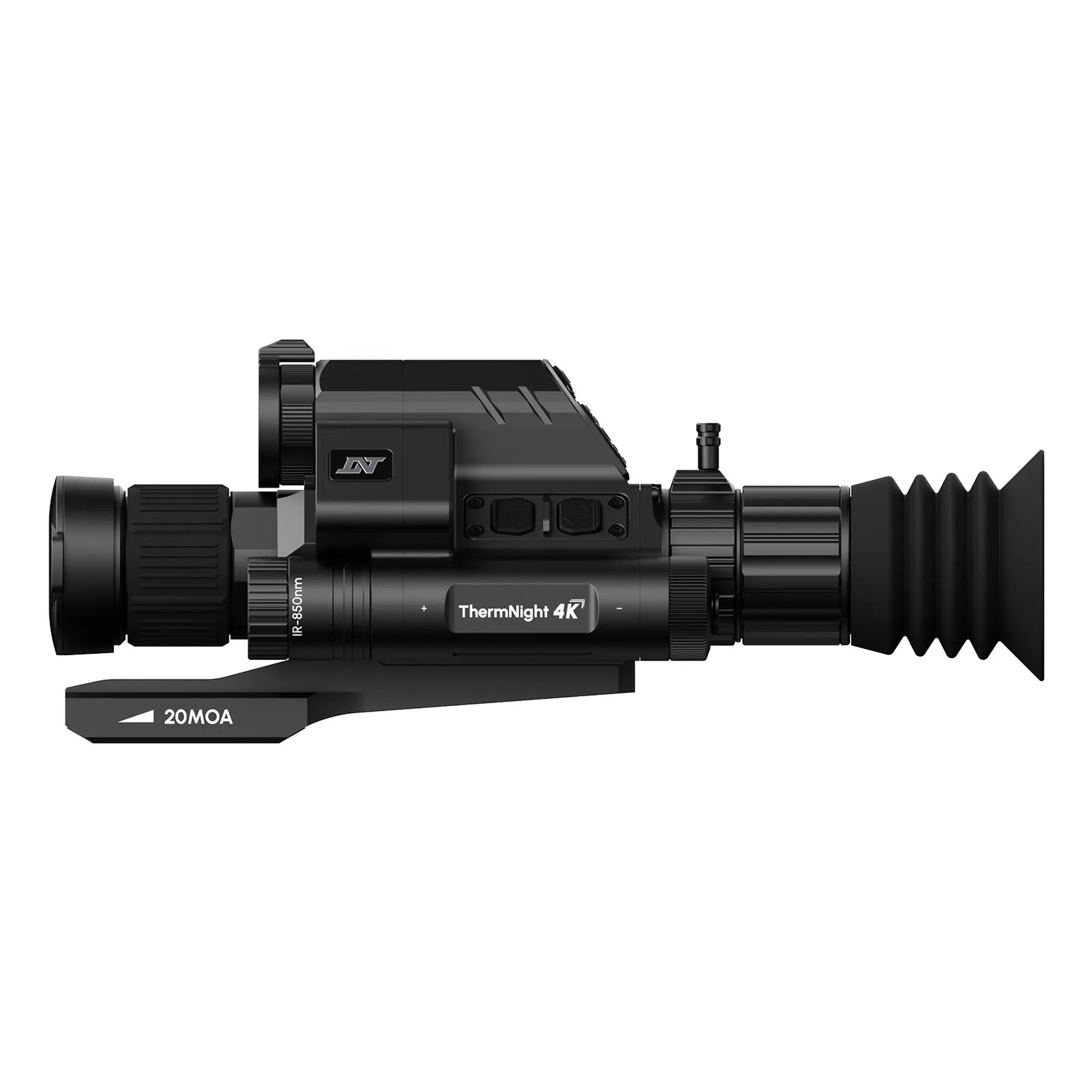
I strictly run DNT Optics for both my scanners and optics across all my platforms. Before the release of the HOUND, I was using my HYDRA (thermal only) as a scanner, and then on my 7.62x39, I have the ThermNight (thermal and day/night vision). If money is an issue, my advice would be to purchase a thermal for a scanner, and you could manage with a night vision scope only for your weapon.
When it comes to searching for hogs, most of the time I’m doing a spot-and-stalk type hunt. They tend to be in grass, rice fields, on the back side of a levee, or anywhere where they are almost hidden. If you are using only night vision, you stand a chance of not seeing them. With thermal, their heat signature glows bright and you are easily drawn to them. If budget constraints are your thing, I would get a thermal scanner to quickly locate them, and then you could use that night vision to finish the job.

Personally, I would recommend a thermal optic with a minimum of a 384 processor, and I would suggest your scanner have a rangefinder. I don’t find having a rangefinder on my rifle is useful in my situations. I use my scanner’s rangefinder as I am stalking and trying to get to around 100 yards or so. Once I get set and freedom starts ringing, I am not trying to figure out range and holdover. It’s more of a "shoot, see where impact is, and adjust" situation. Typically, if I can get within 100 yards prior to shooting, me and my crew can make several well-placed shots while they are still tight.
With all of the different thermal brands on the market today, you have to find one that is built tough, and DNT delivers on that. None of my guns or optics are safe queens; they ride in the side-by-side, the floor of the boat, or the backseat of the truck. I beat on them and they just keep coming back for more. They come with rechargeable batteries (which give me approximately 4 hours per battery), a standby mode for when I am transitioning to a different field, excellent customer service, and a guy on Facebook who responds at 2 am while you’re in the field with a problem.
At the end of the day, you want a high-quality optic that flat-out performs in all weather conditions, and DNT stands tall on that order.

Q5: Should beginners start with night hunting, or is it better to learn the basics during daylight first?
I think as long as you are a safe, responsible gun owner and have great safety skills, you can jump right into this. If you have little to no experience with a firearm, or are skeptical about your safe gun handling, then you should start in the daylight.
When the lights go out, things that are easy in the daytime become harder, so you have to be good with the basics. As previously mentioned, safety is paramount, and if you have to look and see where your trigger is so you don’t put your finger there, then you may need to start off in daylight.
