



Hunting hogs at night is a challenge that can be thrilling. Night time alone creates an obvious challenge, so setting up your rifle to combat the darkness is one approach. But if you want an advantage when it comes to hunting hogs, then follow along with this article.

Night Time Does Not Have To Be So Awkward
Doing anything at night is difficult simply because there is not as much light, which makes it harder to see. This makes navigating the world or performing simple tasks a lot harder when we cannot see what we are doing. So we have tools to combat the darkness. Flashlights are a rudimentary method to have portable illumination on demand. However, there are compromises with using flashlights. Handheld lights are plentiful, inexpensive, easy to use and can help you navigate in the dark but their range can be limited. Depending on the light, it might have a narrow beam so it can only illuminate what you point them at. Everything outside of that beam will be darker. Now try to hunt with a handheld flashlight; it is sub-optimal. You can upgrade to a weapon mounted flashlight and that will make it easier to take a shot in the dark. However, flashlights work both ways. While it lets you see things in front of you, potential game can see your light as well. You want to avoid alerting your game to your presence.
So what can you do to avoid having your flashlight be seen? Some use a different color. Some hunters use red lights, however, it is better to go even higher wavelength into Near Infrared (NIR). This is where night vision comes into play. Whether you have the money to spend on analog night vision or not, you will still need an illuminator. With digital night vision, like the ZULUS and NVMD-C200, they require illumination to see in the dark. Infrared is harder to see with the naked eye. The ZULUS comes with an 850nm IR illuminator while the NVMD-C200 does not. Instead, the NVMD‑C200 can be paired with Quasar TAC IR940 IR Flashlight for discreet nighttime illumination.

Night Vision vs Thermal
While night vision is great for seeing in the dark, it has its drawbacks. Since you need an IR illuminator to see with digital night vision, you are subject to the limitations of that system. An IR illuminator is just an infrared flashlight; whether it is LED based or a LASER illuminator, it is just light being emitted out of a device. So illuminators will struggle with fog, dust, heavy vegetation. Just the illuminator splashing low on the ground can cause the digital sensor to adjust for that over exposure of light, making it harder to see far. Illuminators work great if nothing is between you and your target. There is one benefit to illuminators and night vision, you can get eye glow from certain game animals. Coyotes will look directly at you and if you shine an illuminator at them, their eyes will reflect the light making it look like their eyes are glowing. In some cases, certain animals may be educated or have sensitive enough eyesight to detect even infrared light like an 850nm illuminator. You can get higher wavelength illuminators that are harder to see with the unaided eye but can still be seen with night vision.
Thermal, on the other hand, does not require any light to see, visible or NIR. It is truly passive. You can detect heat signatures a good distance, often farther than you can see with night vision. So in this case a thermal scope like the HYDRA can be more advantageous if hunting hogs at night with dense vegetation. You might not be able to see the whole pig but you might see some of the heat radiating out between twigs and leaves. Compared to using night vision with an illuminator, if you shine it on vegetation, the light will bounce off the outer surface, making it harder to see past the leaves. And since thermal does not see light, shining a laser or illuminator won’t show up in the thermal sensor.

Thermal is generally low resolution. Most thermal devices are produced with 256, 384, and 640 resolution sensors. There are some higher resolution systems but they are not common and rather expensive. Thermal will be lower resolution than analog night vision so do not expect to see farther than night vision.
With that in mind, it is best to set up digital night vision as your primary aiming device. It is higher resolution than thermal and you can still see light. Thermal is great for scanning an area for potential targets. The HOUND is a thermal handheld monocular with built in range finder. You can range to a potential target and the HOUND will show you where to aim. For digital night vision you are best to go with the ZULUS ZHD312R-V2. I prefer the wider 3-12x FOV from the ZHD312R-V2 vs the 5-20x FOV ZHD520R-V2.
You can then scan an area with the HOUND, which is about the same size as a handheld range finder. Once you detect a potential heat signature, you can switch back to looking through a ZULUS digital night vision to take the shot.

Why Not Thermal?
You can absolutely go with a thermal scope and skip night vision altogether. Our HYDRA series of thermal scopes are multi-function. With the right quick detach mount, you can dismount a HYDRA thermal scope and use it as a handheld thermal scanner so you do not have to point your gun at everything you want to look at. You can also set up a HYDRA as a thermal clip-on for low magnification optics. Anything 4x or lower magnification will work. Just know that as you zoom in with a day scope, you will crop out some of the thermal image. In some cases, you might crop out the corners and edges so you will not see some of the onscreen display like battery life or video recording indicator and timer. Using the HYDRA as a stand-alone thermal weapon sight is the better option for setting up your hog hunting rifle. It will keep your gun lighter since you don’t have the unnecessary bulk of a day optic and it is easier to zero the HYDRA as a scope rather than a clip-on.

Also know that thermal has its drawbacks as well. As mentioned earlier, thermal is relatively low resolution compared to night vision. While thermal does not need light to see, it has thermal barriers that it cannot see through like windows and water. Even water in the air can be a thermal barrier, such as fog.
Another aspect that you may want to consider is “how do you alert and point out a potential target to a hunting buddy?”. Thermal cannot see light so you cannot simply signal or point out a potential target with an infrared laser. However, the LRF versions of the HYDRAs do have an onboard laser range finder. If your hunting buddy has night vision, you could use the onboard LRF on your HYDRA. It is an infrared laser and you can use it to indicate objects of interest. The laser can be seen by digital night vision.

ThermNight, Smaller, Lighter, Faster.
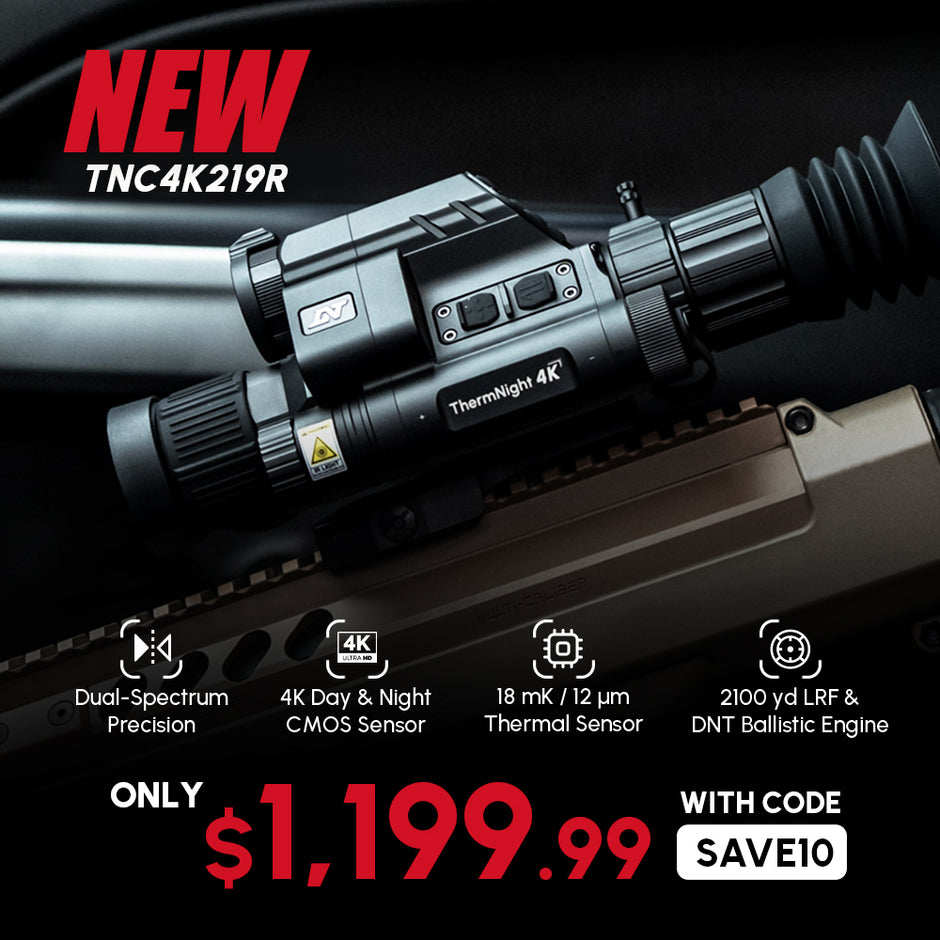
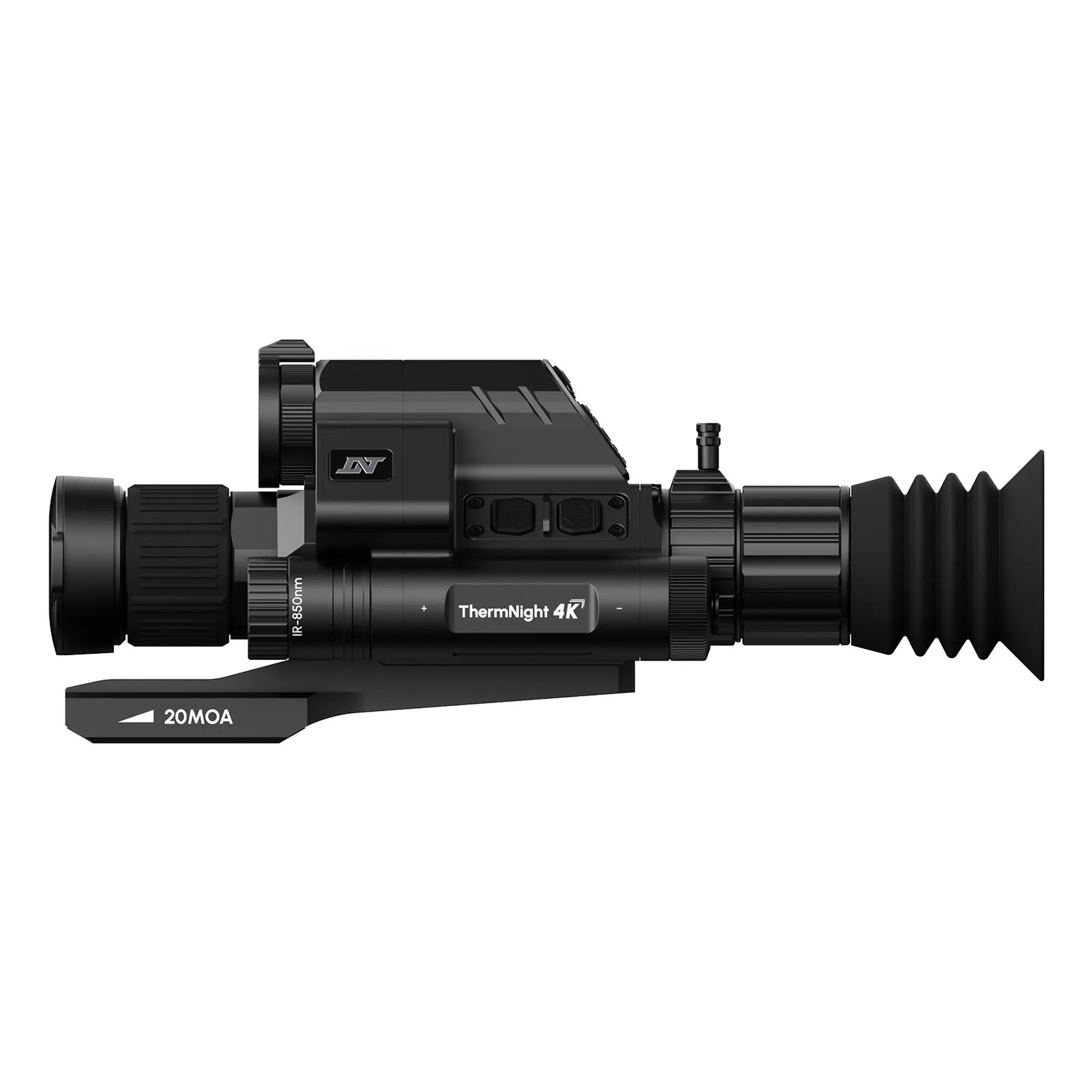
If you want to reduce the bulk you may want to look at the ThermNight series of digital scopes. The ThermNight combines thermal and digital day/night into one device. Imagine a HYDRA and ZULUS all in one device. You get the best of both worlds. The ThermNight scopes all feature picture-in-picture (PIP) so you can display both thermal and digital at the same time. You can set the digital to show day or night as the main image while having the thermal displayed in the smaller PIP window.

Another aspect to think about is not just the fact that the ThermNight is dual spectrum, heat and light, but that it is dual FOV as well. The thermal sensors on the ThermNight scopes all start at a lower base magnification than the digital day/night sensor. Digital all starts at 5x and digitally zooms to 20x. While the thermal sensors can start at 1.5x, 2.5x or 3x depending what model ThermNight you get. If you set up the Thermal Zoom Lock in the scope, you can zoom in with digital while keeping the thermal at its base magnification. This way you can easily scan with the thermal. If you see a potential target, just point the thermal reticle at it and glance down at your digital day or night image and you will already be zoomed in on it. If you zeroed your ThermNight properly then your reticle will be on target. At the same time you can zoom in on a target with the higher resolution digital image but maintain situational awareness by glancing up at the thermal PIP which will have a wider FOV and can show you if there are any other heat sources nearby. Very helpful if you are looking for more hogs especially if they run off.
Just like the ZULUS V2 LRF models, the ThermNights all have onboard laser range finders, ballistic calculators, and infrared illuminators. By having the benefit of digital at the same time as thermal, you can potentially see issues that thermal might not see. Such as branches and other vegetation that could deflect your shot.

Choose the Right Scope for Your Needs
Any of our scopes will help enhance your hunt. They all have onboard video and audio recording. You just need to prioritize what features you want and which of our scopes fits your budget. If you have any more questions about setting up your rifle for hog hunting or need help deciding which DNT Optic to get, then you can reach out to us via email (info@dntoptics.com) or call the office (+1(713)364-9198) and any of our associates can help you narrow down your choice.