



The gyroscope inside a DNT digital night vision or thermal scope plays an important role in ballistic calculations and shooting angle detection. While recalibration is rarely needed, incorrect calibration can affect shooting accuracy.
This guide explains when gyroscope calibration is needed, how to do it correctly, and the most common mistakes to avoid.
When Should You Calibrate the Gyroscope?
Under normal conditions, gyroscope recalibration is not recommended. Every DNT digital scope is precisely calibrated at the factory. In most cases, the gyroscope will remain accurate during normal use.
Gyroscope calibration should only be performed if one of the following conditions occurs:
1. Abnormal Gyroscope Readings
When the scope is placed on a level surface, the displayed cant or pitch angle is noticeably inaccurate. For example, the pitch angle shows an offset greater than approximately ±2° to 3°.
2. Consistently Inaccurate Ballistic Solutions
If the ballistic solution remains consistently inaccurate while all other data, including zeroing, ranging, and ballistic profiles, appears correct, recalibrating the gyroscope is a quick way to rule out potential gyro-related issues.
How to Calibrate the Gyroscope Properly?
When calibrating the gyroscope, it is critical that the scope itself is level in both planes.
Follow these steps carefully:
-
Remove the scope from the rifle and detach the mount
-
Place the scope on a reliable level surface
-
Ensure the scope is level both left-to-right and front-to-back
-
Enter the menu -> Function Settings -> Gyroscope -> Calibration
-
Keep the scope level and stationary for eight seconds during calibration
-
Wait for the calibration process to finish
After calibration, reinstall the scope onto the rifle. The scope will correctly detect shooting angles and apply proper ballistic compensation based on the actual firing angle, ensuring reliable ballistic calculations.

Common Calibration Mistake to Avoid
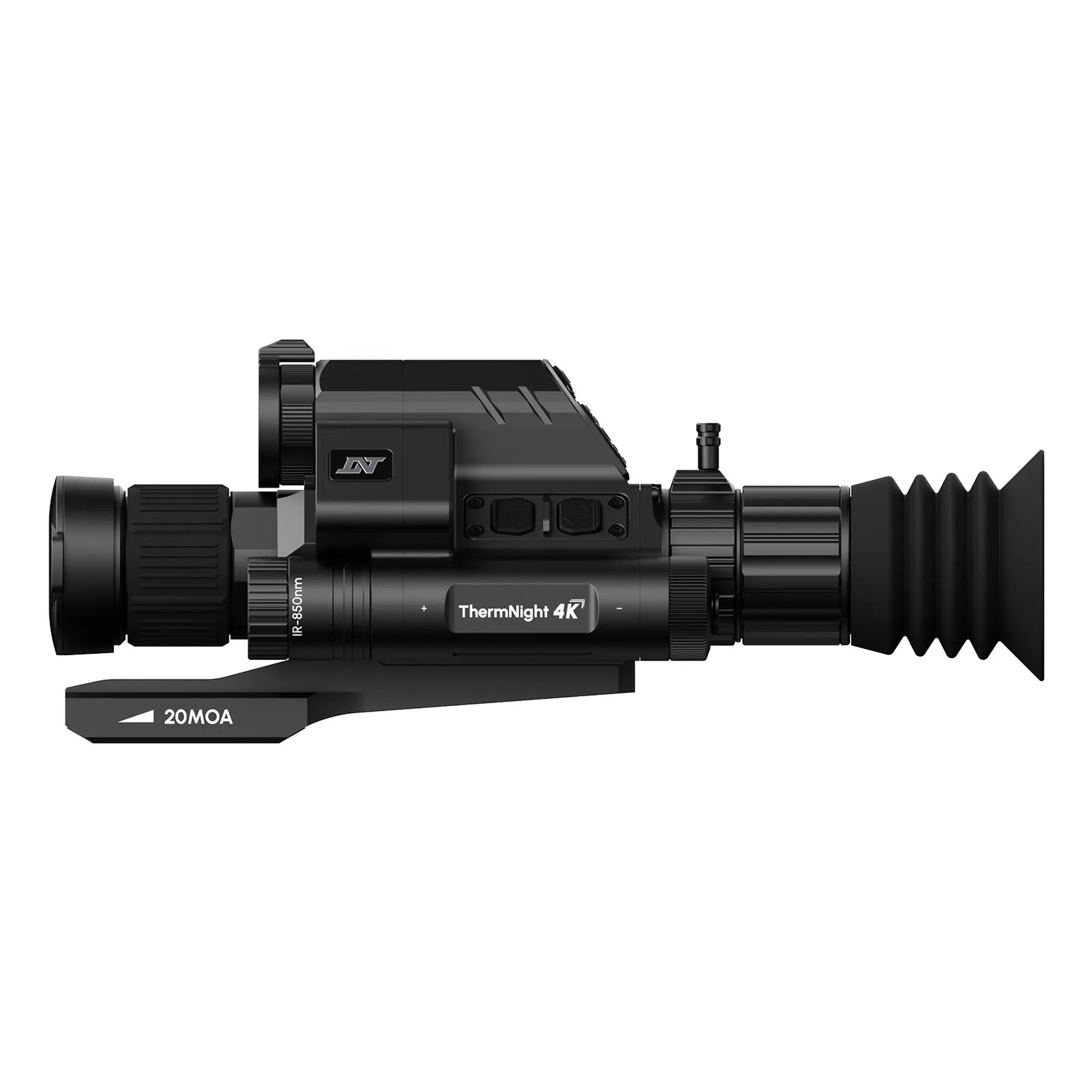
If gyroscope calibration is required, the scope must first be removed from the rifle. This is extremely important because many rifles come with a built-in MOA inclination, such as 20 MOA rails commonly used for long-range shooting.
If calibration is performed while the scope is still mounted, the scope may incorrectly treat its current tilted position as “level”. This causes the scope to calculate shooting angles from an incorrect level reference, potentially resulting in ballistic compensation errors and reduced shooting accuracy.